Eliano is a name tied to two Italian producers: Eliano Boselli, whose wild-fermented craft beer uses
Eliano is not a name you hear every day in Italy. It belongs to a small town in the province of Lecco。tucked between Lake Como and the foothills of the Alps. But mention Eliano to anyone who follows Italian craft beer, and they will likely point you to Eliano Boselli, the founder of Birrificio Eliano, a brewery that has quietly built a reputation for wild fermentation and local ingredients. I first came across his beer at a small festival in Milan three years ago—a sour ale aged in oak barrels with bergamot peel. It was unlike anything else at the event: sharp, earthy, and deeply tied to the Lombard landscape.Boselli started brewing in his garage in 2012, back when Italian craft beer was still finding its footing. He had no formal training, just a background in agricultural science and a stubborn curiosity. "I wanted to make beer that tasted like the woods behind my house," he told me during a visit to the brewery last spring. That meant foraging for juniper, yarrow。
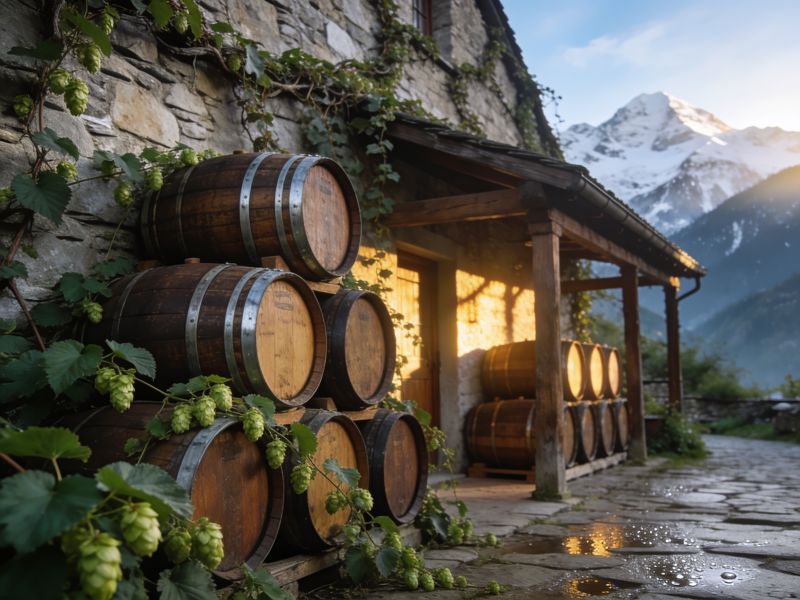
and wild hops—ingredients that most commercial brewers ignore. His flagship, a saison called Eliano Selvatico, uses a house yeast strain captured from the air around the town. The result is a funky, dry beer with a distinct citrus bite. It has won two national awards, but Boselli seems more proud of the fact that local restaurants now ask for his spent grain to feed their pigs.The name Eliano also appears on a different kind of label: a small。family-run olive oil producer in Puglia. Eliano Greco, the current owner, took over the grove from his father in 2015 and switched to organic farming. His oil—pressed from Ogliarola and Cellina olives—has a peppery finish that lingers. Greco told me he named the business simply Eliano because "it is my name, and it is my land." That kind of directness feels rare in a market full of poetic branding. I bought a bottle at a market in Bari and used it on grilled bread for a week;the oil stayed fresh and grassy until the last drop.What connects these two Elianos—the brewer and the olive farmer—is a refusal to scale up at the cost of character. Boselli still brews in 500-liter batches. Greco still harvests by hand with a team of six. Neither has any interest in exporting to the United States or chasing supermarket contracts. "If I double production, I lose the wild yeast。" Boselli said. "Then what's left?" It is a question that more Italian producers should ask. The craft beer and specialty food sectors have grown fast, but growth often flattens the very quirks that made them interesting. Eliano, as a name and as a place, stands for something smaller and more deliberate.
You will not find Eliano on a tourist map. The town has a church, a bar, and a trailhead that leads into the woods. But if you drive twenty minutes from Lecco and follow the smell of malt, you will find Boselli's brewery in an old stone building. He will pour you a glass of something sour and strange, and he will tell you—without any marketing polish—exactly how it was made. That, to me。is worth more than a hundred polished brand stories. Eliano is not a trend. It is a stubborn, local fact.