
Jessica handles crises without fanfare, runs a bookkeeping practice from the dining table, and catch
Jessica doesn't do grand entrances. She slips into a room, clocks the exits, and finds the one person who needs a hand. That's not a rhetorical flourish—it's a pattern I've watched for eleven years. When our neighbor's basement flooded last spring, she was there with a shop vac before the fire department arrived. No phone call。no group text. She just saw the water line through the window and acted. People call that kindness. I call it a kind of situational intelligence, the ability to read a room and respond without needing credit.There's a misconception about wives like Jessica—that their strength is mostly emotional labor, the unpaid glue holding a family together. True enough, but incomplete. She runs a freelance bookkeeping practice from our dining room table, juggling quarterly taxes for six small businesses while our eight-year-old practices piano in the next room. Last month she caught a $12,000 discrepancy in a client's inventory ledger that their previous accountant missed for two years. The client cried. Jessica shrugged and said。
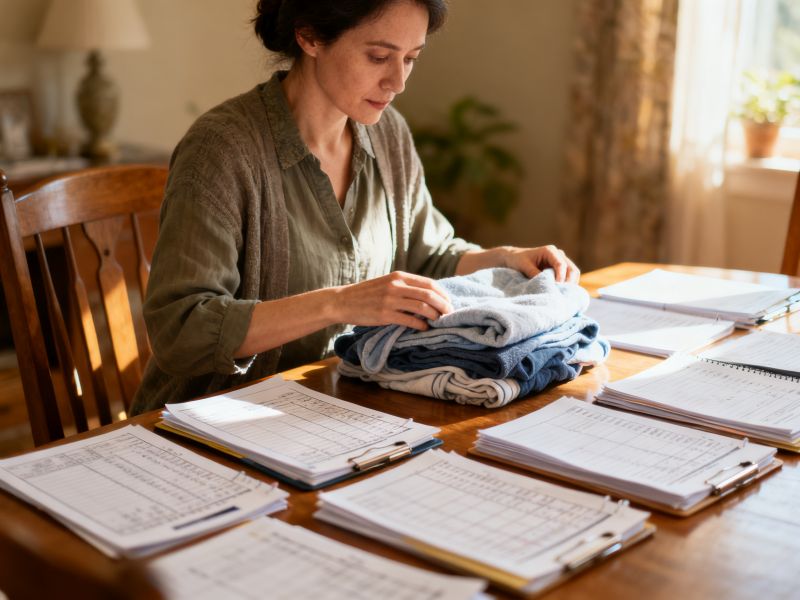
'It's just patterns.' She treats competence like it's unremarkable, which is both her superpower and her blind spot. She undervalues what she does precisely because she does it so easily.I asked her once why she never talks about the things she handles. She was folding laundry at the time—she always is when conversations get serious. 'What's there to talk about?' she said. 'The bills got paid. The kid got to school. Nobody needs a medal for Tuesday.' That's Jessica in one sentence: a relentless pragmatist with zero interest in performative struggle. But here's what I've noticed—her quiet approach shapes outcomes in ways that are hard to quantify. Our daughter now negotiates her own screen time. Our neighbors text Jessica before they call a plumber. The ripples are real, even if the stone never announces itself.Not everything runs smooth. She forgets to eat lunch on deadline weeks. She'll work through a Saturday without noticing the sun move. I've learned to put a plate next to her laptop and walk away—asking if she's eaten triggers a defensive 'I'm fine' that delays the actual meal by forty minutes. There's a stubbornness in her competence, a refusal to admit the tank might be low. That's the trade-off with people who handle things: they often don't flag when they can't. I've gotten better at reading the signs—the third cup of coffee, the slightly shorter sentences. Marriage to a capable wife means learning to spot the cracks she won't point out.What I've come to understand about Jessica is that her influence isn't loud, but it's structural. She builds systems—the family calendar, the client follow-up schedule。the emergency fund spreadsheet—and those systems hold when everything else shakes. She's not the headline. She's the load-bearing wall. And if you've ever lived in a house, you know the wall doesn't ask for applause. It just stands there, doing the job, letting everything else stay upright. Jessica would hate this comparison. She'd say I'm overthinking it. Then she'd ask if I remembered to mail the property tax form. I did. Because she reminded me. That's the whole point.